Everclusive
Where the storms we walk through become the stories we grow from.
Welcome to Evermore Ranch
Evermore Ranch was built in the space between storms — a place where the land, the animals, and the people tending them are part of a shared story.We are a small regenerative farm raising heritage livestock with intention, quiet stewardship, and deep respect for nature’s rhythms.Our philosophy is simple: what we walk through becomes what we grow from. The same is true of the soil, the herd, and the community we build here. Every season carries its own lesson, and every creature plays a part in it.From here, you can explore the ranch, meet the animals, learn about our practices, or step into the deeper work that grew from this land.
Life moves through this land on hooves, wings, four legs, and familiar paths.
Some animals are here to carry the future forward.
Others are here because this is home.All of them shape the living rhythm of Evermore Ranch.
Gloucestershire Old Spots
Gentle, slow-grown heritage raised on purpose and pasture.
We breed with intention. Animals are chosen not only for conformation and lineage, but for temperament, resilience, and the way they move through the land.Our Gloucestershire Old Spots are raised slow and close to the earth, growing into their roles as mothers, teachers, and steady companions in the field. Each carries a distinct personality — shaped by soil, season, and daily handling.
This is our foundation sounder:
a beginning built on quiet leadership, balanced energy, and animals who know the land well enough to work with it.
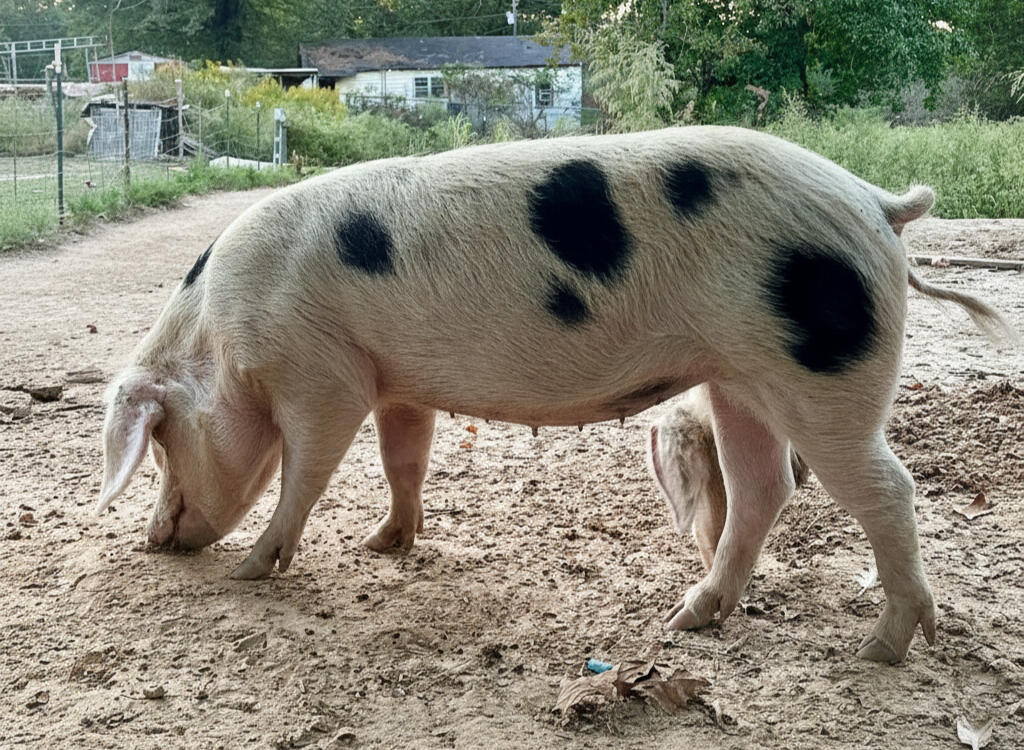
Leela
Quiet in her leadership and steady in her care, Leela anchors the sounder with calm presence and patience.
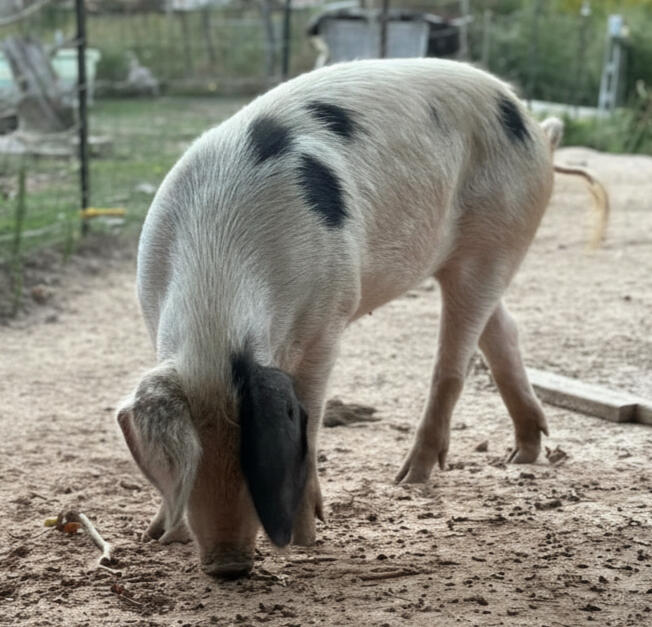
Domino
Curious at heart and soft in her presence, Domino moves through the pasture with quiet attentiveness and thoughtful calm.
Mallory
Gentle in her thinking and observant by nature, Mallory carries a quiet presence shaped by patience and awareness.
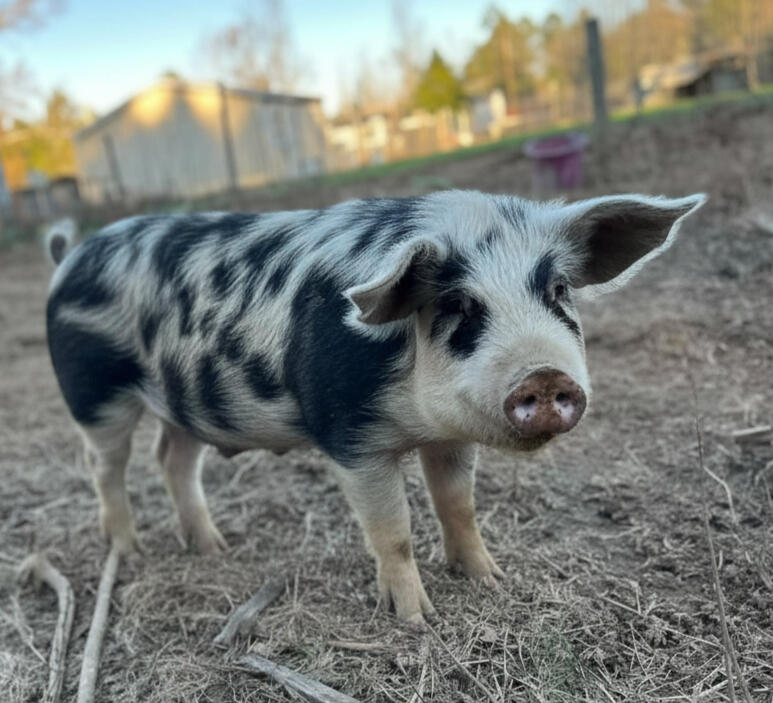
Opossum Queen
Playful by nature and quick to engage, Opossum Queen brings lightness to the sounder with her curiosity and steady enthusiasm.
50% Red Wattle
Mickey
Calm by nature, with steady manners and an easy confidence that settles the space around him.
Fry
Inquisitive and alert, carrying a gentle spirit beneath his curiosity
From the Sounder to the Pasture
As part of maintaining a healthy breeding sounder, we periodically raise out piglets intended for freezer use. These pigs are born here, handled gently, and raised on pasture with access to rooting space that supports both animal wellbeing and soil health.Our market pigs are a thoughtfully balanced cross, with 25% Red Wattle influence added for hardiness, foraging ability, and depth of flavor. This blend supports slow growth and pigs that work the land without becoming destructive.Availability follows the natural rhythm of gestation and season, and is offered to those who want to raise their own food with patience, intention, and care.
Dairy Goats
Tiny hooves, big personalities, and just enough mischief to keep us humble.
We keep dairy goats with intention. Animals are chosen not only for milk and breed character, but for temperament and presence.For more than fifteen years, our Mini LaManchas and Nigerian Dwarfs have shaped the rhythm of this land — turning briars and brush into sweetness, raising their young under oak shade, and reminding us what it means to work alongside animals rather than above them.This is a seasoned herd, built over years of careful selection, quiet leadership, playful balance, and the steady wisdom of animals who know the land and its seasons well.
Nigerian Dwarf
Nigerian Dwarfs bring a thoughtful balance of richness and resilience to the herd. Their milk is dense and sweet, well-suited to small-scale dairy use, while their size allows them to move lightly across the land without overwhelming it. Curious and expressive by nature, they tend to engage closely with both herd and handler, making them attentive mothers and steady contributors to daily life here.
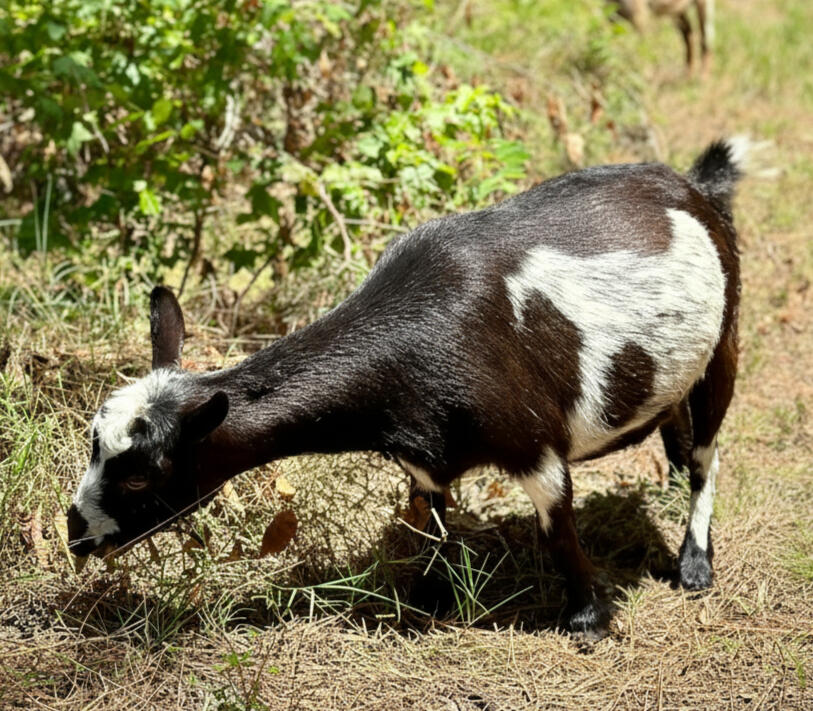
Pearl
A steady presence and devoted mother, carrying the quiet authority of a seasoned matriarch.
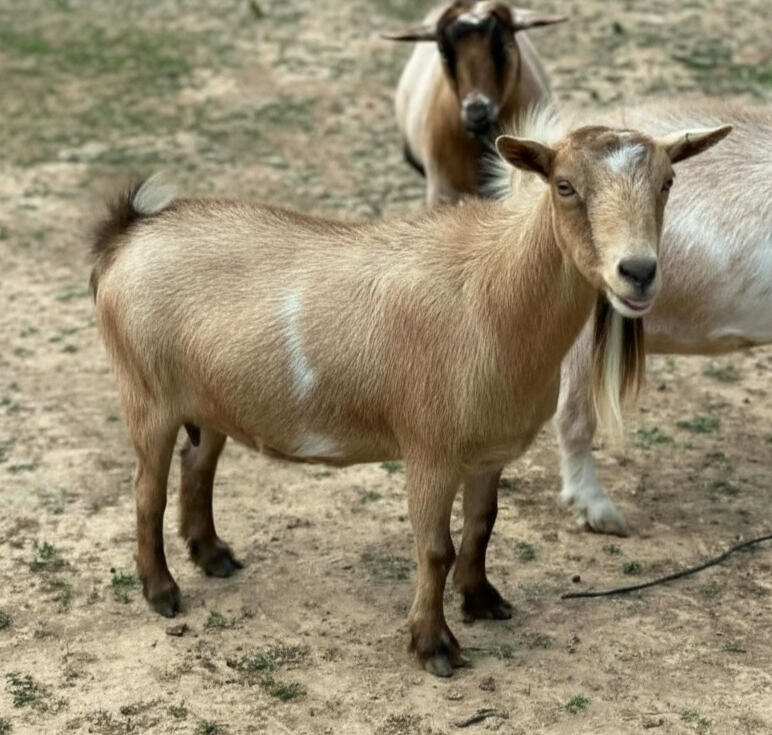
Sol
gentle and curious, moving through the pasture with a soft, exploratory presence.
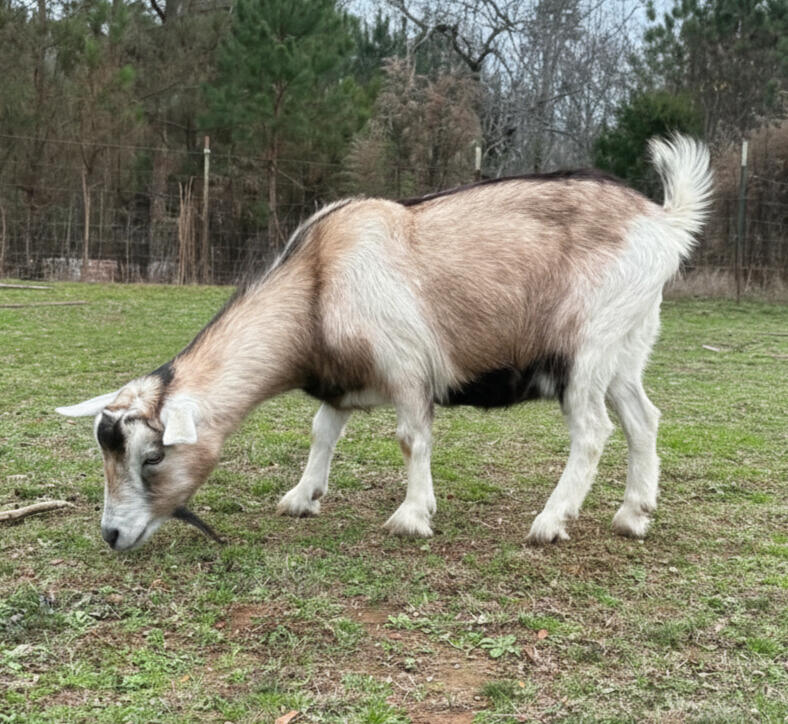
Peaches
confident and watchful, a steady presence known for rich milk and quiet authority.
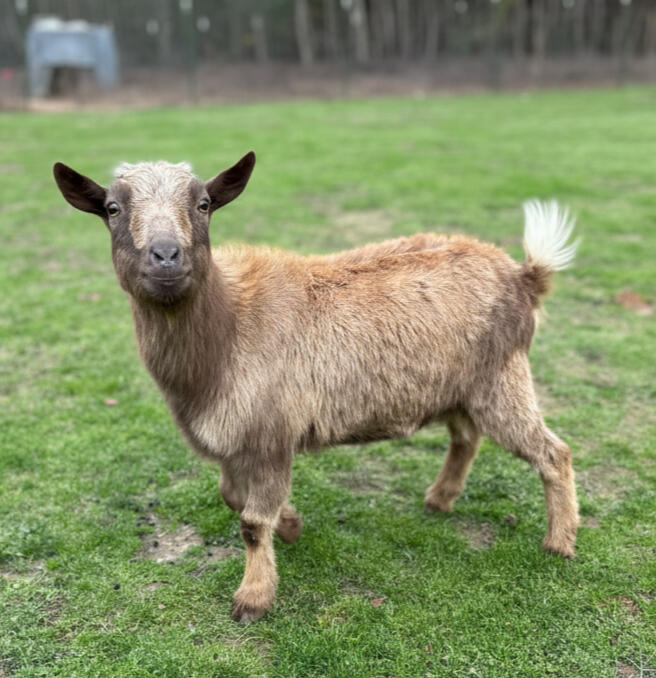
Brownie
A quiet producer who keeps a respectful distance, steady and reliable in her work.
Polly
Openly affectionate and determined, with a loyalty that runs deep once earned.
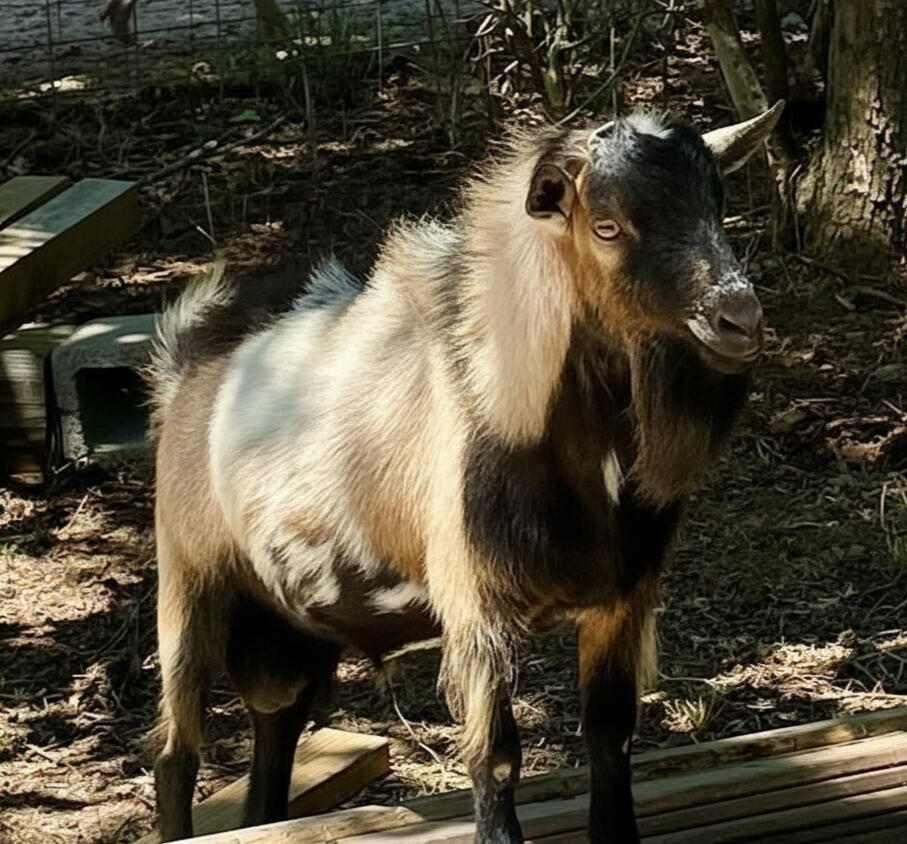
Ruckus
Independent and alert, a buck who keeps his own counsel and stays one step ahead.
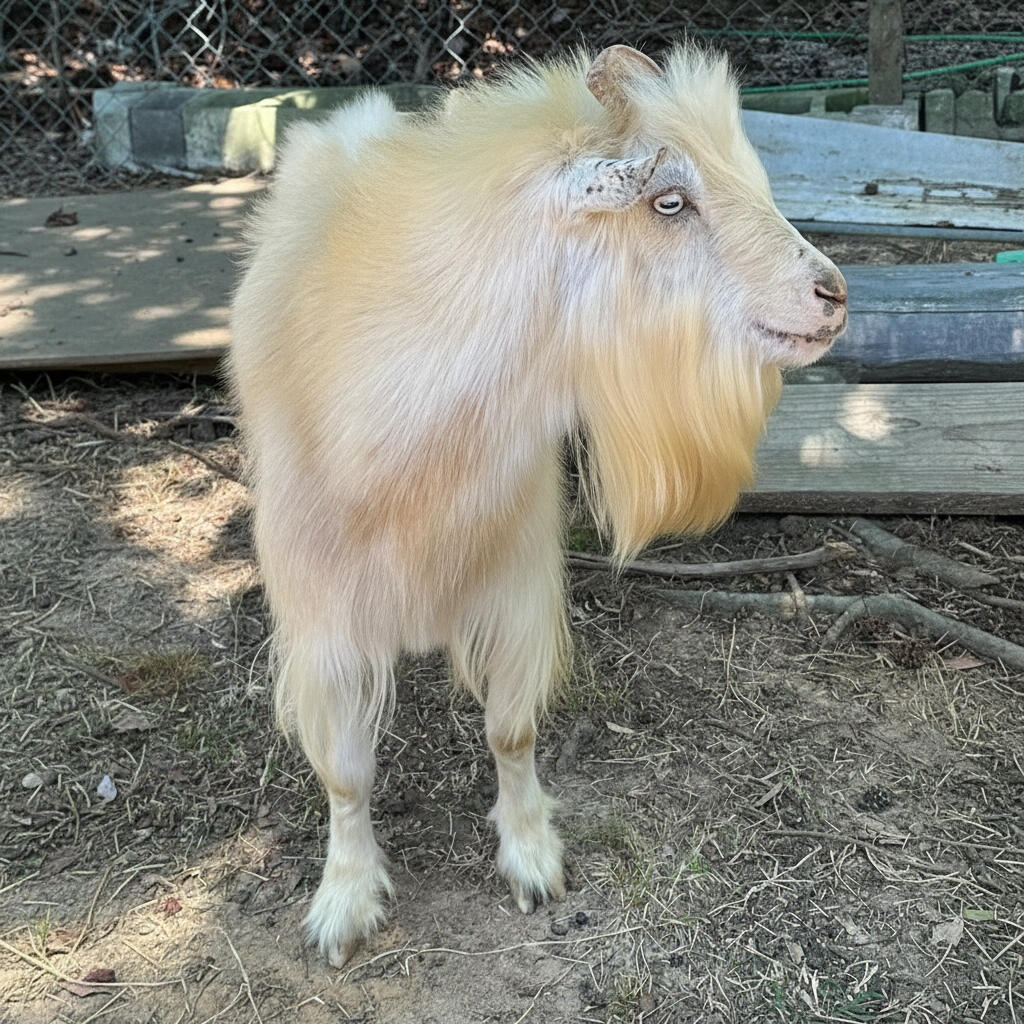
Dexter
Grounded in strong milk bloodlines, contributing depth and consistency to the herd.
Mini LaMancha
Mini LaManchas offer steadiness and consistency, bringing a calm, grounded presence to the herd. Their balanced milk production and even temperaments make them reliable contributors through the seasons, while their strong maternal instincts support a cohesive, low-stress herd dynamic. Unassuming and patient, they tend to work quietly in the background, shaping daily routines with a dependable rhythm rather than demanding attention.
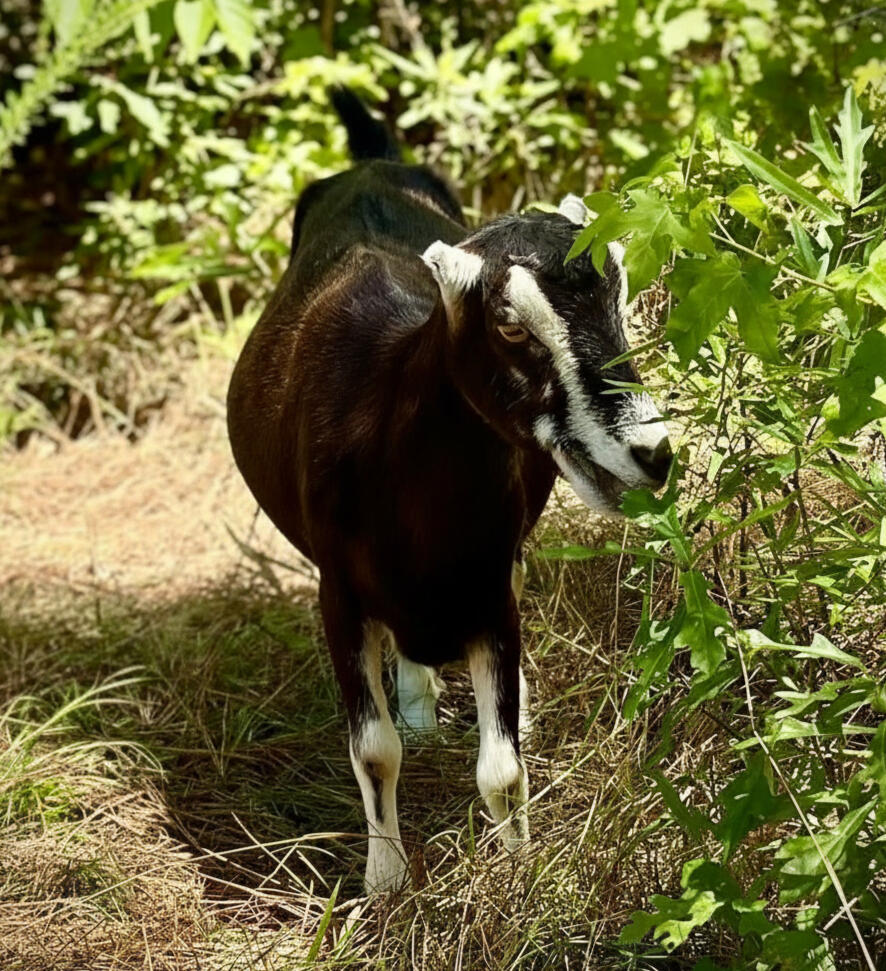
Dobbi
steady matriarch, generous milk
Calm and grounded, Dobbi carries herself with quiet authority and the kind of consistency a herd leans on.
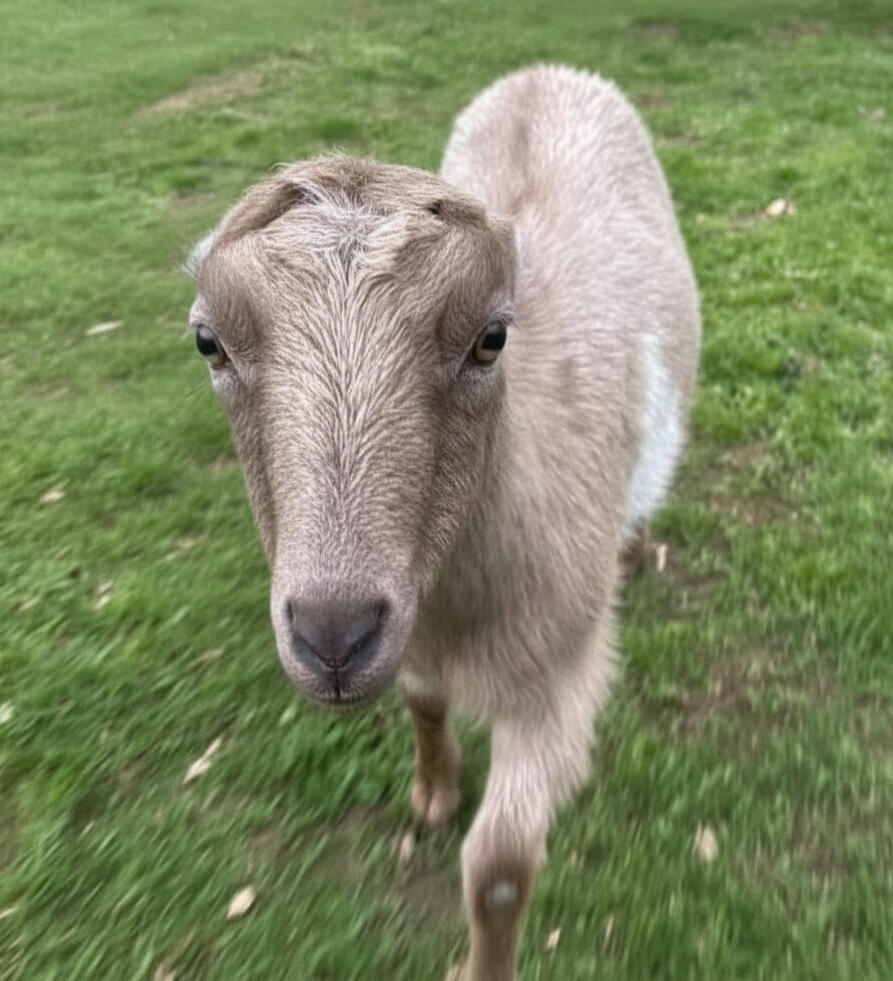
Rhiannon
Soft in her presence and quietly observant, carrying an uncommon grace through the herd.
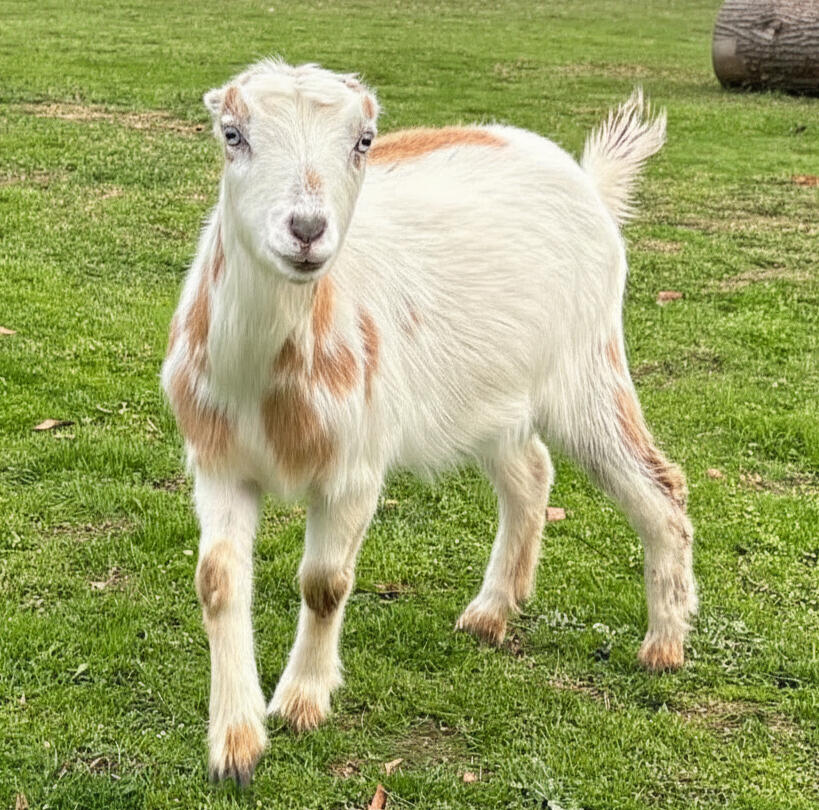
Sophie
Joyful and openly affectionate, with an eagerness that feels more like welcome than demand.
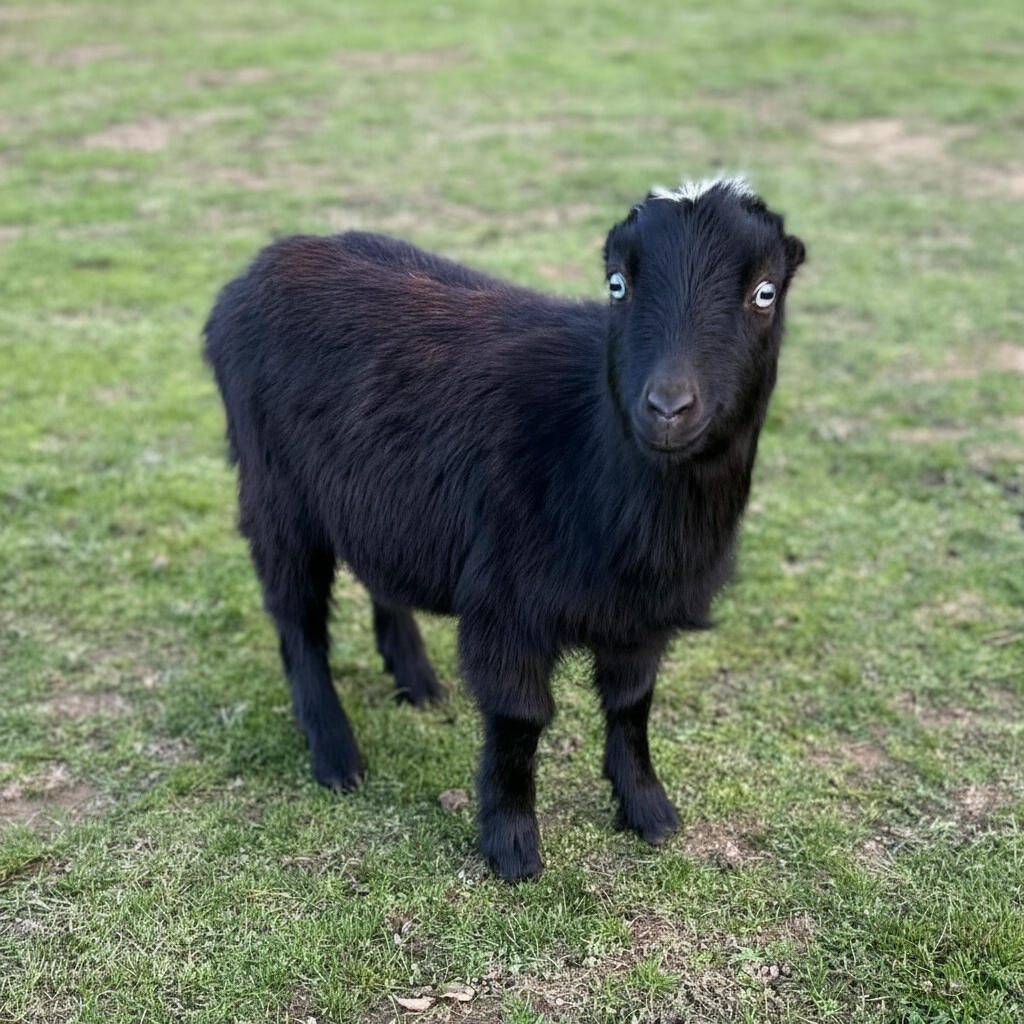
Tizzy
Alert and expressive by nature, announcing each arrival with bright eyes and clear voice.
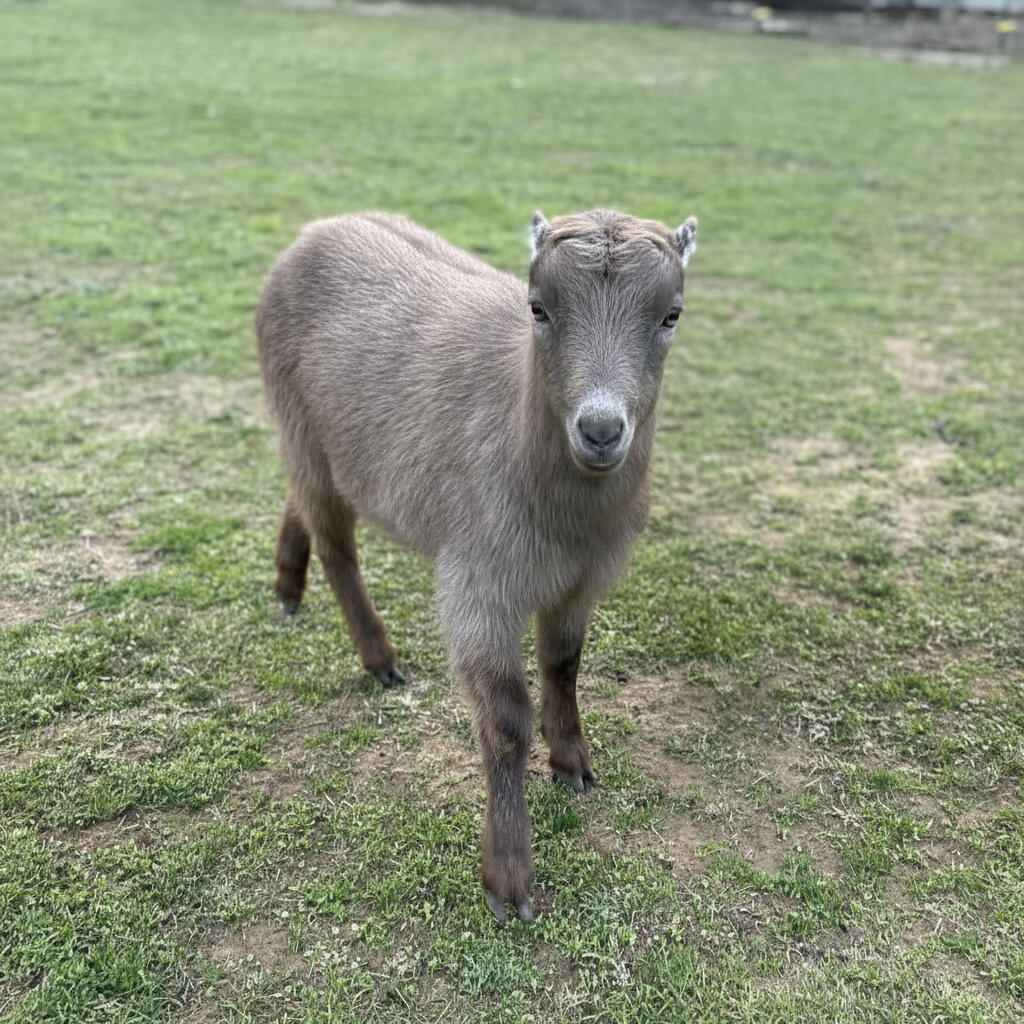
Willow
Polite and composed in a small frame, moving with steady manners and quiet confidence.
Nettle
Watchful and outspoken, marking each step beyond the gate with honest commentary.
From the Herd to the Homestead
As part of maintaining a healthy dairy herd, we raise goats with attention to balance rather than volume. Milk here is gathered seasonally and used first within our own household, with surplus shared thoughtfully as the rhythm of the herd allows. Breeding decisions are guided by temperament, maternal strength, and long-term sustainability rather than output alone.Availability follows the natural cycles of kidding and lactation, and offerings—whether milk, young stock, or companions—are limited and seasonal. Our focus remains on animals that thrive within the land and the herd, and on relationships built through patience, care, and respect for the work these goats quietly do.
Companions
Those who belong without needing a reason.
These animals are not part of a breeding program.
They are not here to perform, produce, or become something else.Some arrived quietly and stayed.
Some earned their place through instinct, vigilance, and time.
Others never fit a category — and never needed to.They live in the margins of the farm:
between barns and fence lines,
in the pauses, the watchful hours, the long memory of place.They move between shadow and sun,
keeping watch where we cannot,
grounding the land simply by being present.Each one belongs here —
by choice, by temperament, by the work of simply remaining.
Permanent Farm Cats
These cats are not adoptable.
They are not temporary, and they are not passing through.They chose the barns, the rafters, the fence lines —
and stayed.Their work is quiet and constant,
their presence woven into the daily rhythm of the farm.
They belong here by instinct, memory, and time.
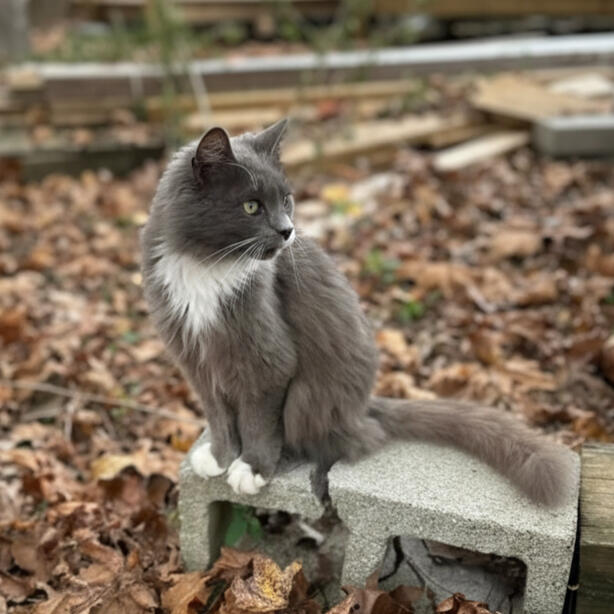
Waldo
The Elder
He turned twelve in 2025. He is steady, seasoned, and deeply rooted in the rhythm of the farm — a quiet constant who has seen more seasons than most. His presence is subtle but grounding, the kind that only comes with time.
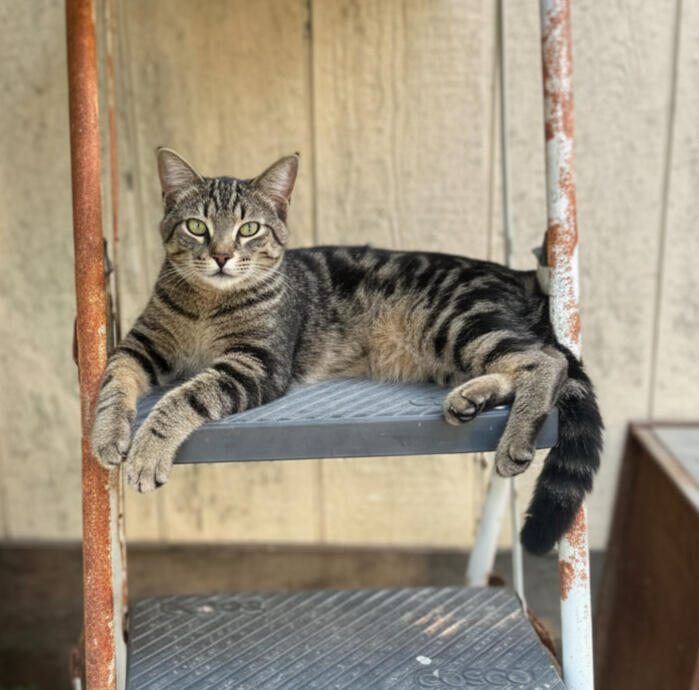
Barni
The Muscle
Barni is the young muscle of the farm — agile, alert, and always where the work is happening. He moves with confidence and purpose, quick to respond and quicker to adapt, earning his place through action rather than noise.
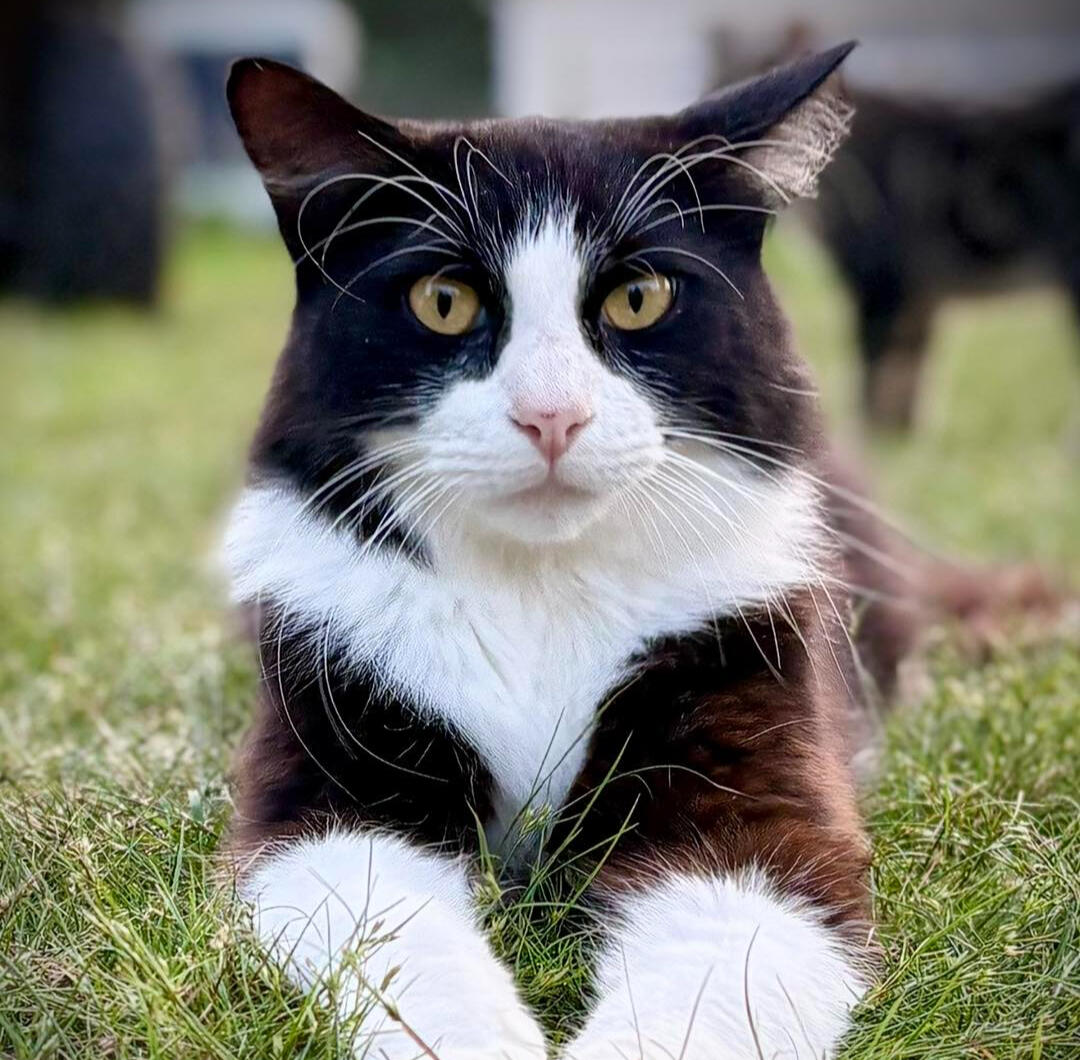
Moose
Spokescat, mouser, permanent
Moose is the spokescat of Evermore Ranch, though he has never needed words to prove his worth. A phenomenal mouser and constant presence, Moose has earned permanent sponsorship through instinct, consistency, and an uncanny sense of exactly where he is needed.
Chosen by the Land
Not bred for purpose, and never asked to be anything other than themselves. Booboo, Frankenfurter, and Emuli exist outside tidy definitions — fixtures of the farm by presence alone. They move through days at their own pace, adding rhythm, curiosity, and quiet humor to the land. Not livestock, not pets, not working toward anything. Simply part of the place, woven into the pauses, the margins, and the moments that make Evermore feel lived in.
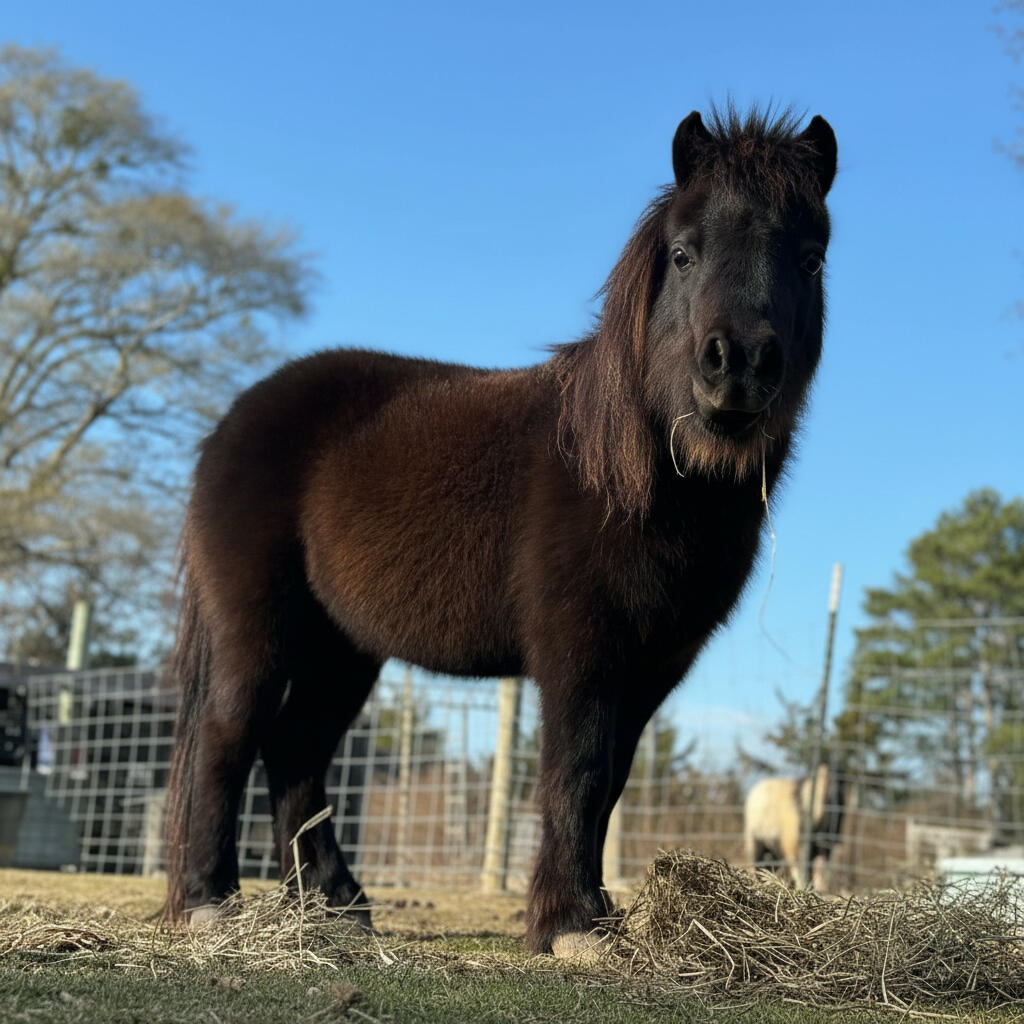
BooBoo
Born here. Stayed forever.
Booboo was born on Evermore Ranch to a rescued mama and never left.
She is small in stature and enormous in presence — steady, curious, and entirely convinced the farm belongs to her.The fastest way to get her attention in the pasture is to call “kitty, kitty, kitty” — a reminder that despite her size and confidence, she is completely and unapologetically spoiled.
Emu-li
Tall, watchful, unimpressed
She sees everything.She stands apart from the daily rhythm of the farm, observant and alert, always aware of what’s happening — and often judging it silently.
She is not interested in fitting in, and she has no intention of explaining herself.Emu-li adds perspective. And occasionally, chaos.
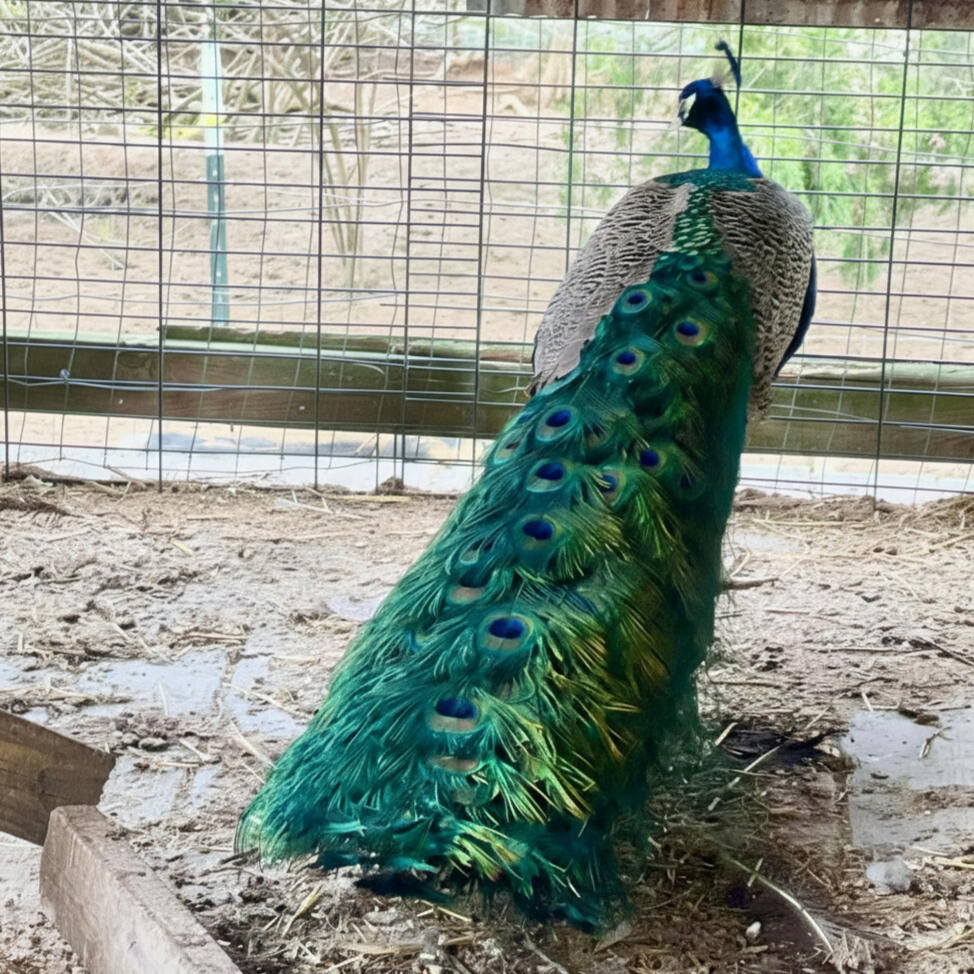
Frank-N-Furter
Flash, drama, and impeccable timing.
He arrives exactly when you least expect him — announcing himself loudly and without apology.He is beauty and noise, confidence and spectacle, reminding us that not everything on a farm has to be practical to be valuable.
Sometimes presence alone is enough.
Livestock Guardian Dogs
Steady eyes, quiet boundaries, wisdom shaped by night and time.
Our guardian dogs live and work full-time with the land, the herd, and the people who tend them. Their presence is steady and deliberate — protection offered without noise, authority held without force.Most of our guardians are Komondor and Great Pyrenees blends of varied lineage, chosen not for uniformity but for instinct, discernment, and the ability to think independently while remaining deeply bonded to their work.They are not pets, and they are not on display. They are partners shaped by seasons, routine, and trust — reading the dark as easily as the daylight, holding quiet boundaries through long nights, and carrying a kind of wisdom that only comes from time spent watching while others sleep.
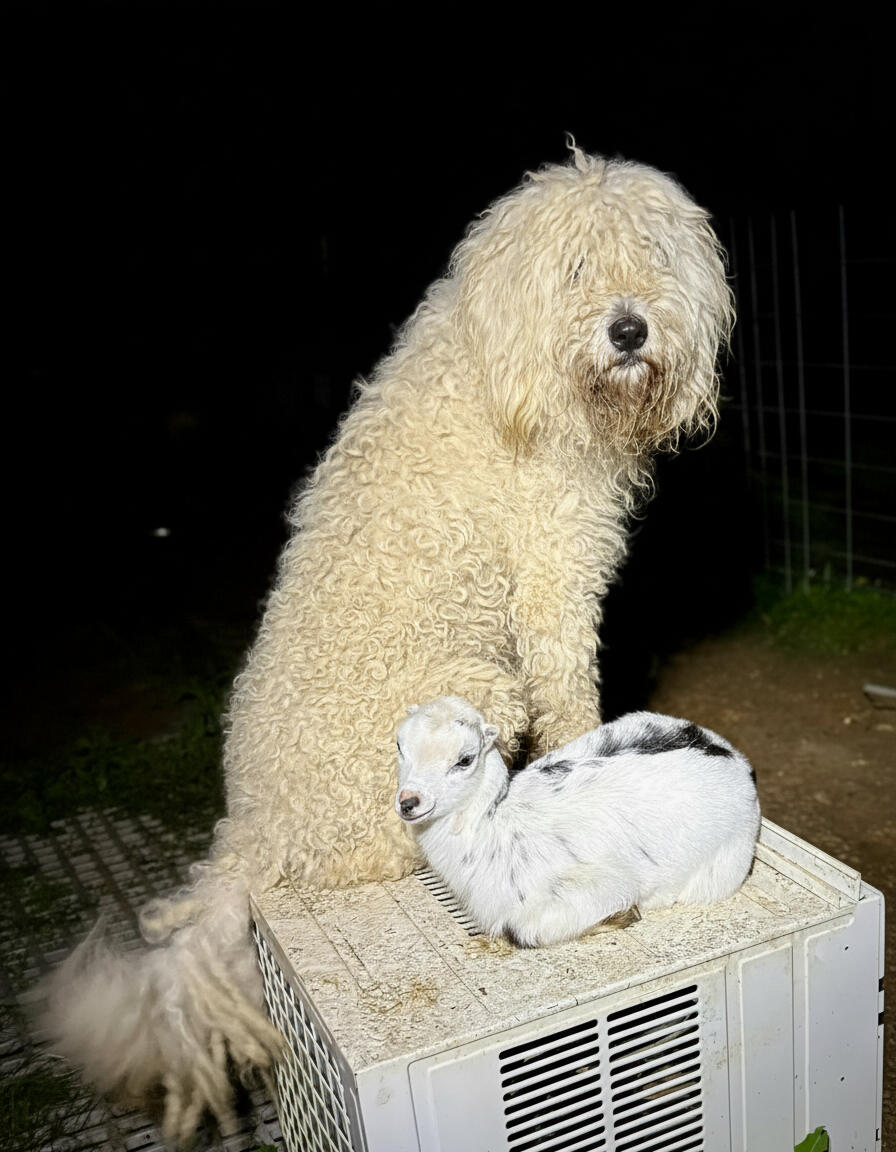
Leesi
Raised with a closer circle, she is often the one seen — the bridge between the dogs, the herd, and the people who come through this land. She reads energy before movement, settles where trust feels right, and does her work without needing distance to do it. Gentle with those who belong, unwavering when something feels off, Leesi reminds us that discernment and connection are not opposites — they are partners.
Occasional Working Litters
On rare occasions, we raise a small litter of guardian puppies. These litters are planned only when there is an established waiting list of working farms seeking a dog raised with livestock from the start.Puppies are placed intentionally, with an emphasis on instinct, environment, and long-term fit. We do not produce puppies for availability, trend, or demand.
Farm Cat Project
Working cats. Thoughtful placement. Clear limits.
Evermore Ranch has a long history of caring for cats in need. In our earlier years, we operated as a rescue — taking in kittens, providing rehabilitation when needed, and thoughtfully placing cats into environments where they could thrive.Those years shaped how this project exists today.While we no longer function as an open-intake rescue, the Farm Cat Project grew directly from that hands-on experience. It reflects what we’ve learned about temperament, proper placement, long-term care, and the responsibility that comes with helping animals well — not just quickly. Knowing when to say yes matters. Knowing when to say no protects the animals and the integrity of the work.What the Farm Cat Project Is TodayThe Farm Cat Project is centered on intentional placement rather than intake volume. Each cat is considered individually, with care taken to match temperament, environment, and long-term well-being.Most cats in the program are strong mousers, comfortable living outdoors, and independent while still enjoying human connection on their own terms. They are best suited for farms, barns, workshops, and rural properties where they can move freely and feel at ease in their role.Some cats may also enjoy limited indoor time, depending on both the home and the cat’s individual preferences. Our goal is always to place cats where they feel secure, useful, and respected for who they are.Occasionally, a kitten comes through whose temperament or needs make them better suited for indoor life rather than outdoor or working placement. When that happens, the kitten is placed directly into a carefully matched indoor pet home rather than remaining within the Farm Cat Project’s working-cat placement pool. These situations are the exception — not the focus — and are handled thoughtfully, one at a time, with the kitten’s long-term well-being guiding every decision.
Available Farm Cats and Capacity
The Farm Cat Project is intentionally small and carefully managed. We currently have three cats available through the program, each placed with long-term success and safety in mind.All three are approximately two years old, spayed, fully vaccinated, and up to date on flea prevention. They are confident mousers who thrive in outdoor or barn-based environments, where they can do the work they enjoy and move comfortably within a working farm setting. Some may also appreciate limited indoor time, depending on the home and the individual cat’s comfort level. As always, placement is guided by temperament and what will best support each cat over time.Because the farm is protected by guardian dogs, the project operates within firm but thoughtful limits. For safety reasons, we only take in kittens. Adult cats are extremely difficult for our dogs to accept, and introducing them would place both the cats and our working dogs at risk.Kittens are able to acclimate gradually to the rhythms, boundaries, and protections of the farm in a way adult cats cannot. Growing up within this environment allows them to develop confidence and familiarity rather than being asked to adapt under stress.To maintain this balance, we are unable to accept additional kittens until one or more current cats are adopted. These limits protect the animals already here while ensuring new cats have the best possible chance at long-term success.Clear limits are how we ensure every animal here is protected, respected, and cared for well.
Meet the Cats
Before placement, we take time to ensure each cat is matched to an environment that fits their temperament and long-term needs. Adoption through the Farm Cat Project is donation-based rather than fee-based, allowing adopters to contribute in a way that supports ongoing care while honoring the realities of farm life.Donations help offset veterinary care, preventative treatments, and daily needs for the cats currently in the program. Placement decisions are guided by fit and safety first, with adoption never treated as a transaction.
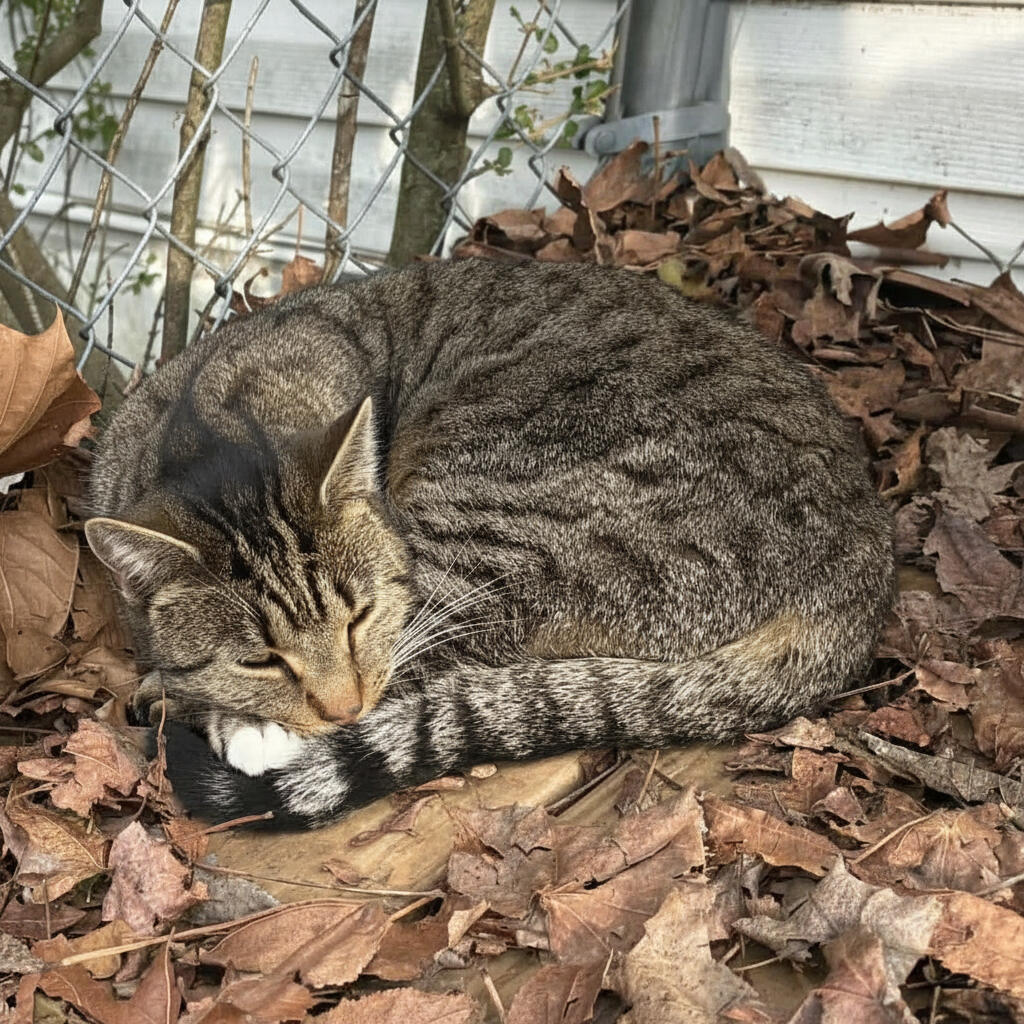
Butterbean
Confident and independent. Best suited for a barn or outdoor-based home
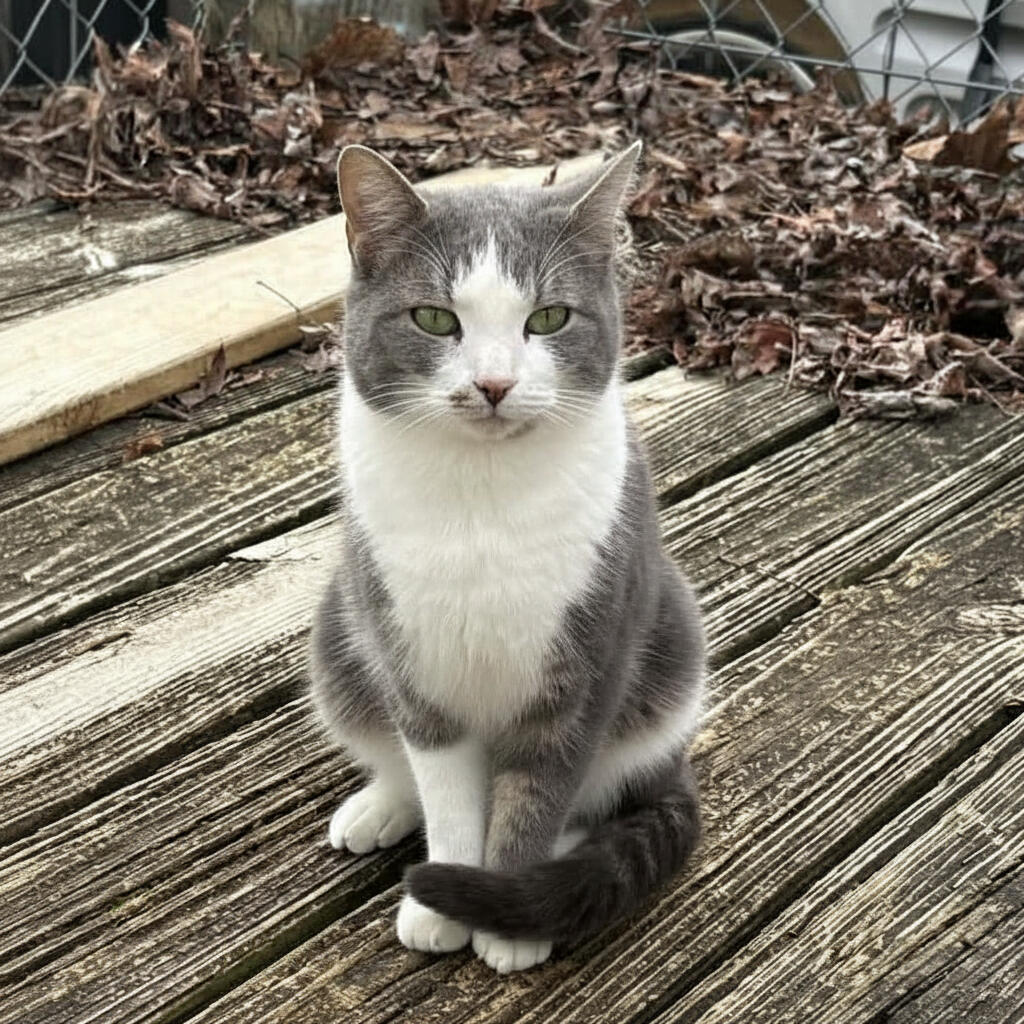
Blueberry
TextQuiet, observant, and reliable. Prefers space and routine, thrives in working environments
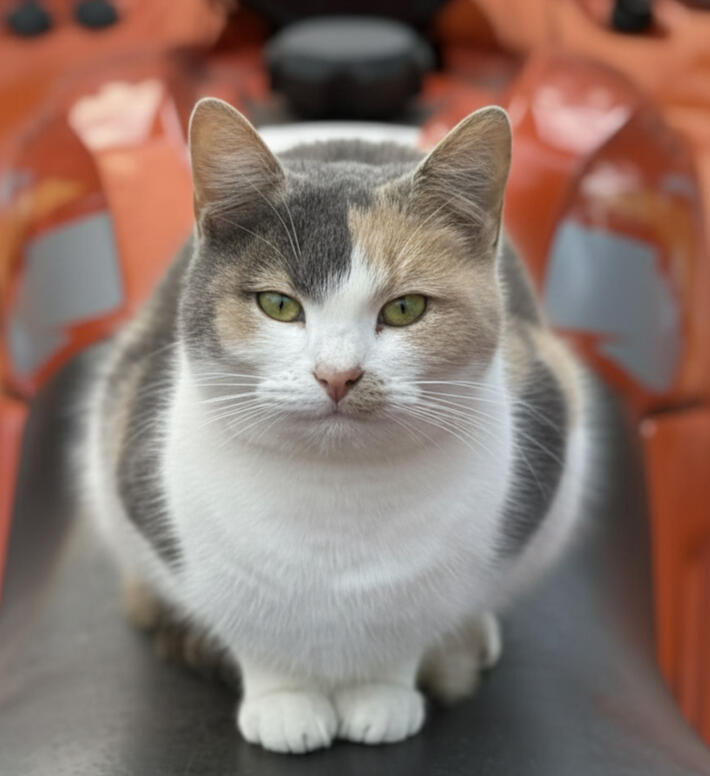
Kati
TextAlert and curious, with solid hunting instincts. Adapts well once settled
Sponsorship
Supporting care without increasing intake.
Not everyone is in a position to adopt, and sponsorship offers a meaningful way to support the Farm Cat Project while honoring the limits that keep the program healthy and sustainable.Monthly sponsorships help cover the ongoing costs of care for the cats currently in the program, including feed, flea prevention, annual vaccinations, and routine veterinary care. This support allows us to provide consistent, preventative care without expanding intake beyond what the farm can responsibly manage.Sponsorship is designed to sustain the work — not to increase volume. It does not reserve or assign a specific cat, guarantee intake of additional kittens, or override capacity, safety, or placement standards. These boundaries exist to protect the animals already here and to ensure the care we provide remains thoughtful and ethical.If you’re interested in sponsoring, please reach out for current options and details. Sponsorship opportunities may evolve over time as the needs of the program change.The Farm Cat Project exists because experience taught us that good intentions are only the beginning. Thoughtful structure, clear limits, and respect for the animals are what allow this work to last.
Care in Practice
Care at the ranch is not reactive. It is planned, consistent, and shaped by systems that protect animal wellbeing over time.Every decision — from breeding schedules to intake limits — is made with long-term health, safety, and sustainability in mind. This approach allows animals to receive steady, thoughtful care without urgency, overextension, or unnecessary intervention.
Early-Life Care & Neonatal Support
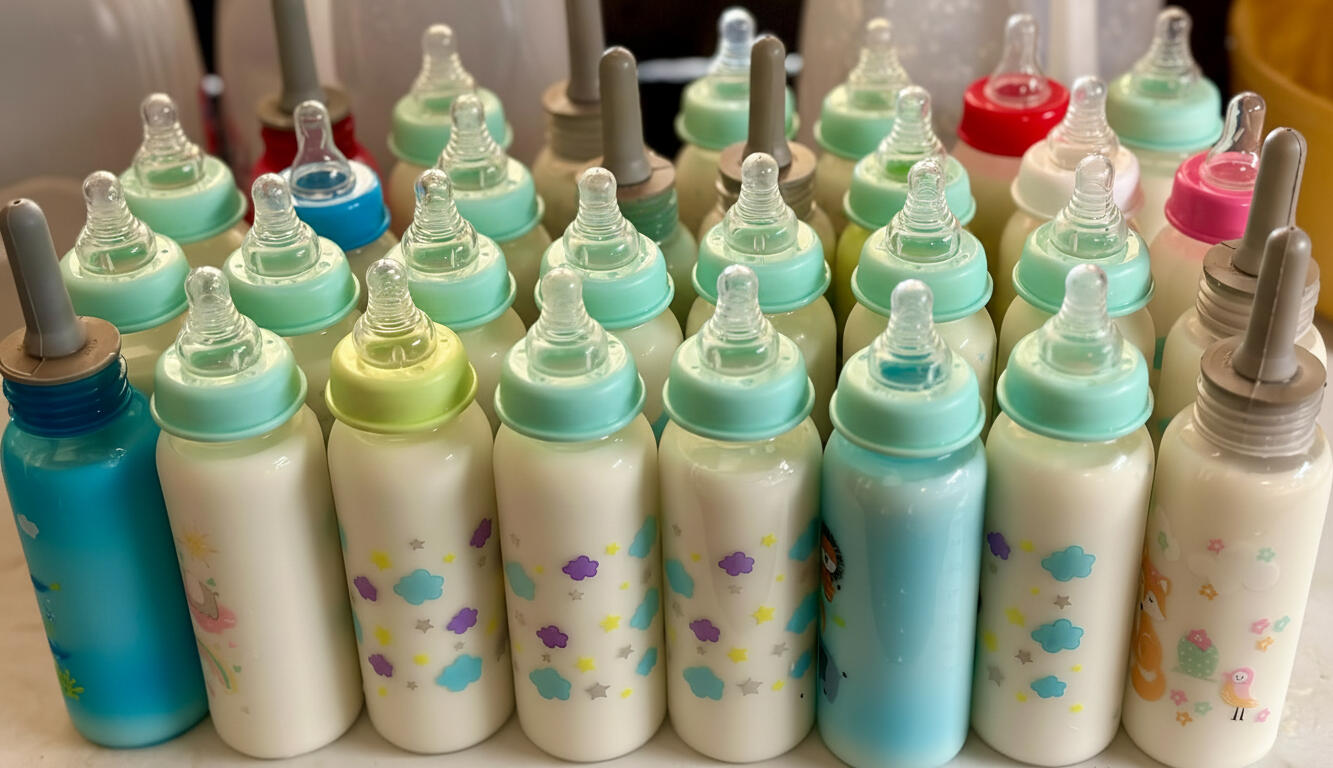
When animals are born here, their care is never improvised.Established neonatal care protocols are in place before kidding and farrowing seasons begin. These include structured monitoring, bottle-feeding systems when required, and safe milk storage practices that allow for calm, effective response when additional support is needed.Preparation — not urgency — is the foundation of early-life care on the ranch.
Biosecurity & Care Boundaries
Protecting animal health requires more than good intentions — it requires limits.Clear biosecurity practices are maintained to reduce risk, prevent cross-contamination, and support stable herd health. Outside animals are not introduced casually, and intake decisions are always weighed against the safety of animals already here.Rescue situations, when they occur, are handled thoughtfully and within strict limits. This is not an open-intake facility. Sustainable care depends on knowing when to say no.Boundaries are not a lack of compassion — they are how care remains ethical and effective.
Seasonal & Farm Rhythms
Life on the ranch follows natural rhythms.Breeding, birthing, growth, and rest all happen within seasonal cycles that honor both the animals’ needs and the land’s capacity. Not every season is a production season, and not every animal holds the same role year to year.By working with these rhythms rather than against them, the ranch supports healthier animals, steadier outcomes, and a more sustainable system overall.Care here is not rushed — it is lived.
About Evermore Ranch
Evermore Ranch is a working farm rooted in responsibility, respect for animals, and the understanding that care is more than love — it is consistency, preparation, and knowing where limits are necessary.Our approach has been shaped by nearly three decades of hands-on rescue, rehabilitation, and animal care work in one form or another. Those years taught us that good care is not reactive or trend-driven. It is planned, informed by experience, and grounded in respect for both the animals and the land they live on.We raise livestock, steward working animals, and operate small, intentional programs built around genetics, animal psychology, and long-term wellbeing. Decisions here are guided by what supports healthy animals over time — not urgency, volume, or outside pressure.Brandi brings formal training in canine temperament testing alongside years of practical experience working with animals across species. That foundation informs how animals are evaluated, placed, and managed, with careful attention paid to behavior, environment, and individual needs. Understanding temperament — not just species — is central to how this ranch operates.This is not a rescue in the traditional sense, nor is it a production-driven operation. Evermore Ranch exists in the space between — where ethics, practicality, and stewardship meet. Every program here is intentionally limited, shaped by experience, and designed to remain sustainable for the animals, the land, and the people caring for them.Care here is shaped by experience, education, and the humility to keep learning.
The People Behind the Ranch
This work is carried by people who live it every day. Care here is hands-on, experience-driven, and grounded in long-term responsibility to both the animals and the land they steward.
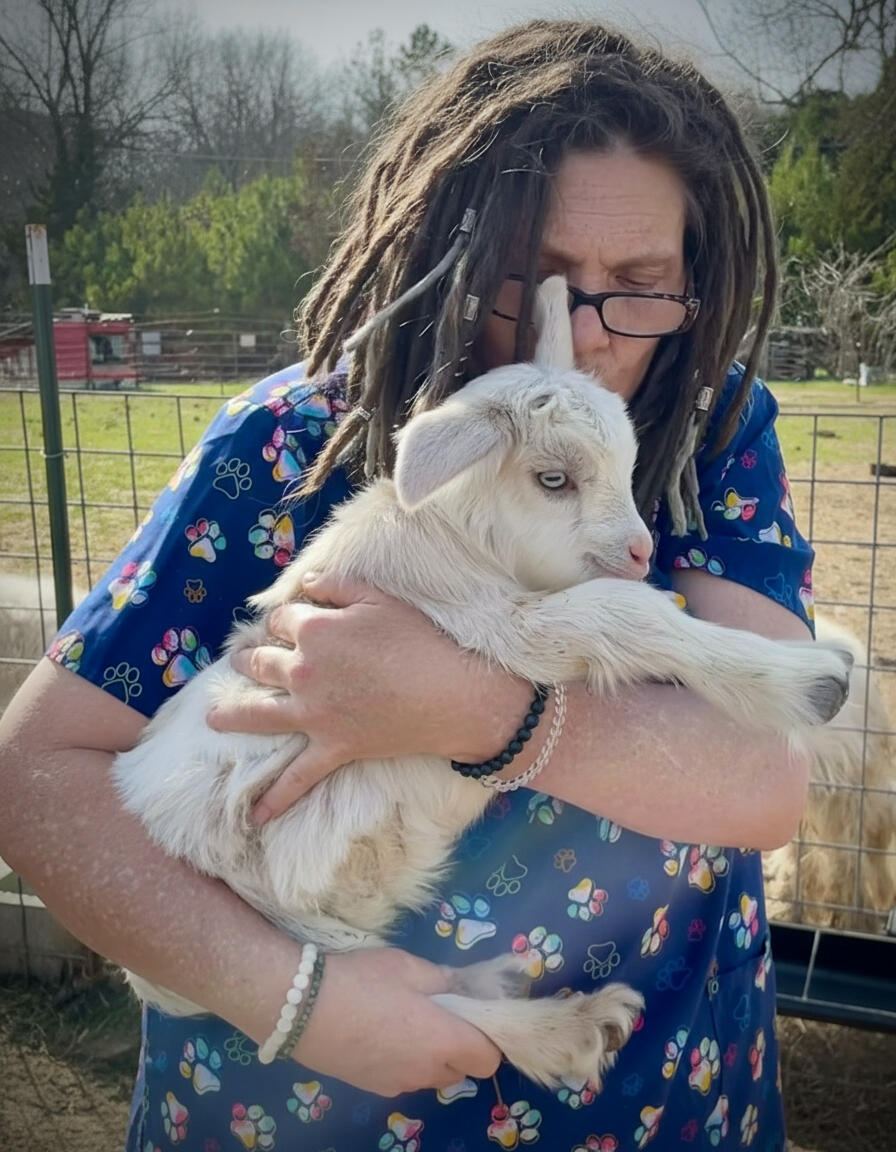
Brandi
Founder · Primary Care & Program Steward
Brandi is the primary caretaker and steward of the ranch, overseeing daily animal care, neonatal programs, and long-term planning across all areas of operation.Her approach is shaped by decades of hands-on experience, lessons learned through practice, and a firm belief that doing fewer things well is better than doing many things poorly. She is closely involved in neonatal care and bottle-feeding systems, animal evaluation and placement decisions, and the development of intentional programs such as the Farm Cat Project.Her work balances compassion with structure — ensuring animals receive thoughtful care without burnout, chaos, or overextension. Temperament, environment, and long-term wellbeing guide every decision made here.
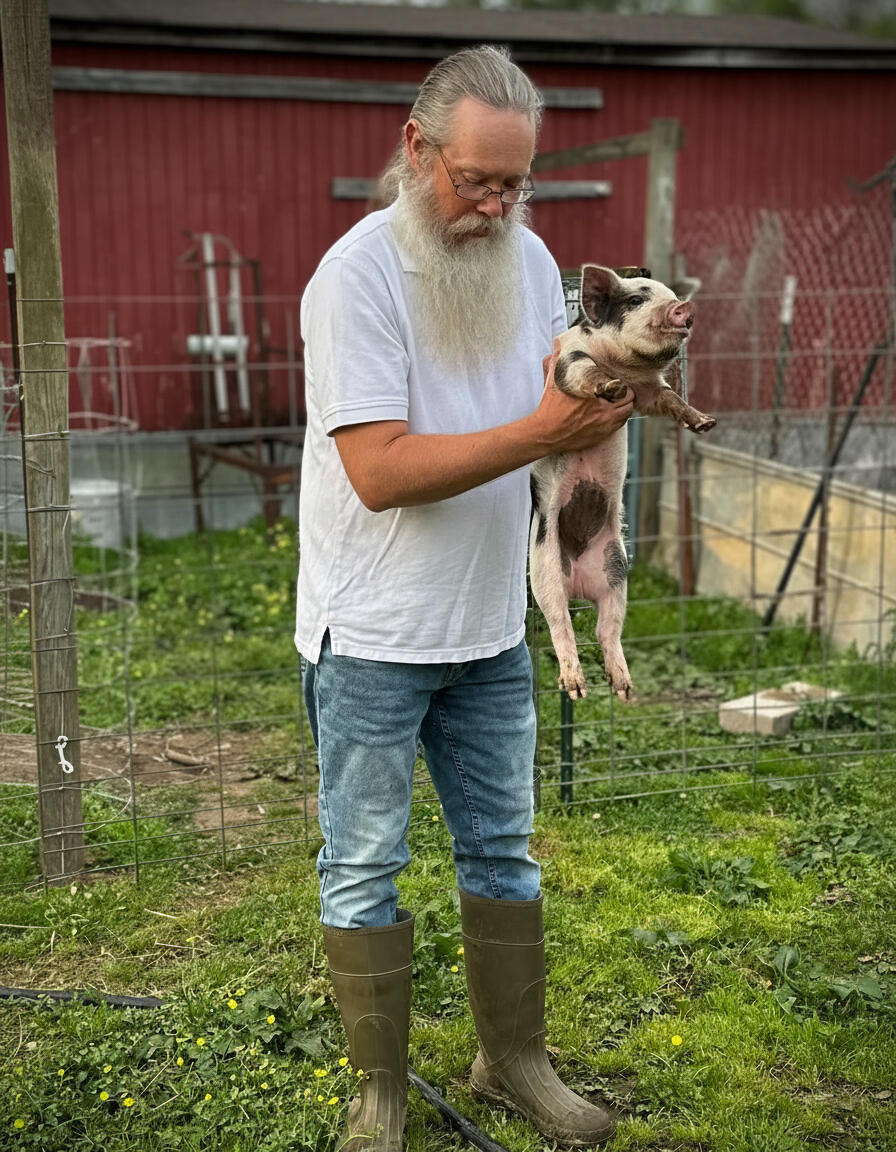
Greg
Operations · Infrastructure & Livestock Handling
Greg is the steady backbone of the ranch’s daily operations — the one quietly fixing, building, hauling, handling livestock, and stepping in wherever things don’t go according to plan.He plays a central role in maintaining fencing, infrastructure, and physical systems, as well as assisting with livestock movement and hands-on farm work that keeps everything running safely and smoothly. His approach to farm life is grounded, patient, and dependable.Whether it’s repairing a broken gate or sprinting after an escaped piglet at the least convenient moment, Greg brings humor, steadiness, and an unwavering commitment to the work that supports both animals and land.
Contact Evermore Ranch
For questions regarding livestock, programs, sponsorships, or general inquiries, please reach out directly.📧 Email: [email protected]📍 Location: North Alabama
🌾 Social Media: Linked belowEmail is the preferred method of contact, as it allows responses to be sent thoughtfully and without disrupting overnight or seasonal care schedules.
Before Reaching Out
Due to the nature of farm work and animal care, response times may vary. Messages are answered personally — not automatically — and during farm hours whenever possible.For common questions regarding programs, availability, or care practices, we encourage reviewing the site information first, as many answers are provided throughout the pages.
Contact the Ranch
Farm Phone (call or text): (256) 212-0114
Farm life does not always allow us to carry a phone safely, so calls will often go to voicemail. Messages are checked during farm hours.Text is preferred for non-urgent communication and follow-up, including sharing photos or additional details when appropriate.